Back to Suffah
E

From Your Lord
Reading Surah al-Baqarah (2:147) through Hadith

After several verses about the change of qiblah, the different responses to it, and those who recognized the truth yet concealed it, Allah (SWT) brings our attention back to the very source of truth:
الْحَقُّ مِن رَّبِّكَ فَلَا تَكُونَنَّ مِنَ الْمُمْتَرِينَ
“The truth is from your Lord, so never be among those who doubt.”

Al-Tabari explains that the truth here concerns the qiblah Allah had commanded. Whatever objections were raised against it, the direction given to the Prophet Muhammad ﷺ had come from his Lord. He also clarifies that the warning against doubt does not mean the Prophet himself was uncertain. Although addressed to him, it carries an instruction for those who follow him.
What stays with us is how the ayah begins. Before the warning against doubt, Allah reminds us where the truth comes from.
الْحَقُّ مِن رَّبِّكَ
“The truth is from your Lord.”

These words bring to mind a hadith narrated by Al-Hasan ibn Ali (radiyallahu anhuma), who remembered the Messenger of Allah saying:
دَعْ مَا يَرِيبُكَ إِلَى مَا لَا يَرِيبُكَ فَإِنَّ الصِّدْقَ طُمَأْنِينَةٌ وَإِنَّ الْكَذِبَ رِيبَةٌ
Da' ma yaribuka ila ma la yaribuka, fa inna as-sidqa tuma'ninah, wa inna al-kadhiba ribah.
“Leave what makes you doubt for what does not make you doubt. Truthfulness brings tranquility, while falsehood brings doubt.”
Jami at-Tirmidhi 2518 — Hasan Sahih

فَإِنَّ الصِّدْقَ طُمَأْنِينَةٌ
“Truthfulness brings tranquility.”
The hadith speaks of leaving doubtful matters for what is free of doubt. Reading it alongside this ayah makes me think about how we come to feel certain of something, and how easily we can become attached to that certainty.
Sometimes we reach a conclusion and become so comfortable with it that we stop questioning whether we have understood everything correctly. Admitting that we may have missed something, or that we still have more to learn, is not always easy.

And yet, the ayah does not say that the truth comes from how certain we feel. It says that the truth comes from Allah.
That difference matters. His revelation is true, but our understanding of it may still be incomplete. We can misunderstand a verse, overlook its context, or become too attached to an interpretation simply because it is familiar to us.
The hadith reminds us to be careful about what we accept as certain. Truthfulness brings tranquility, but that tranquility is not something we can manufacture by insisting that we are right. Nor does a feeling of peace, by itself, establish that something is true.

When we are unsure, we can return to the Qur'an, seek knowledge, and listen to those who understand more than we do. And when we discover that we have been mistaken, may we be willing to accept that without feeling that our faith has somehow become weaker.
We are still learning, and our understanding will not always be complete. But the truth does not depend on how much of it we have managed to understand.
And so we return to the words with which the ayah begins:
الْحَقُّ مِن رَّبِّكَ
“The truth is from your Lord.”

#SurahAlBaqarah #AlBaqarah \#ReadingSurahThroughHadith #Tadabbur #Hadith #Truth #Certainty #Guidance #SeekingKnowledge #تدبر #تفكر #سورة_البقرة #القرآن #القرآن_والسنة #الحق #اليقين #طلب_العلم #الهداية #الإيمان
Al-Baqarah (2:147)
The truth is from your Lord, so never be among the doubters. (147)
Comments · Re-Reflects
MKA SOMRAT (مْ كِ أ سُمْرَتْ) @mkasomrat
Sep 11
“I'm just a kid. That’s the truth!”
MKA SOMRAT (مْ كِ أ سُمْرَتْ) @mkasomrat · Sep 11
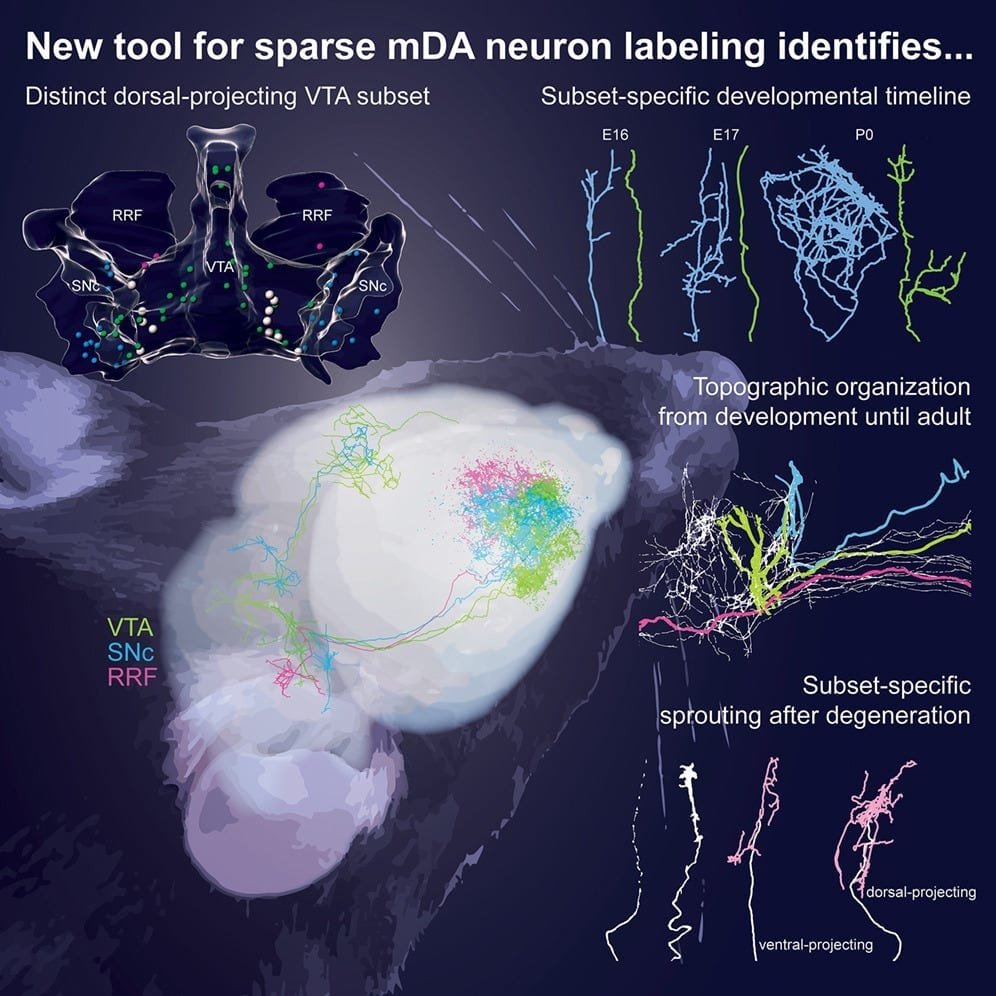
بِسْمِ ٱللَّهِ ٱلرَّحْمَـٰنِ ٱلرَّحِيمِ ١«In the Name of Allah, the Most Beneficent, the Most Merciful.»Using a novel genetic strategy, researchers mapped individual midbrain dopamine neurons across development, adulthood, and degeneration. This atlas reveals hidden neuronal diversity and circuit wiring—offering SPIN a framework to study how synaptic maintenance changes with age.
0 0 29

What Holds You Back from the Quran?
Some people drifted because they think they are not good enough.
Some, because they had no time.
And others, because they felt like hypocrites, reading the Quran while still struggling with sin.
These are the whispers of Shaytan. Beware of them.
Because the truth is: the things you think disqualifies you from the Quran are the reason you need it most?
Do not wait to become worthy of the Quran before you return to it; let the Quran lead your journey toward becoming better.
Start with one verse, and your time will be blessed with its Barakah.
And if you sin, don't let your sin drive you away from the words of your Lord. Return to Him. Seek His forgiveness. Keep trying.
The Quran is not reserved for those who have already found their way. It is guidance for those who are still finding it.
So read it. Listen to it. Reflect on it. Let it speak to your heart and guide your steps.
Be sincere, and seek Allah's pleasure.
Keep walking, even if your steps are small.
Begin where you are, with what you have, and trust Allah with the rest.
You will be surprised by the blessings Allah brings into your life from places you never imagined. In Shaa Allah.
Jummah Mubarakah.

Sad (38:29)
[This is] a blessed Book which We have revealed to you, [O Muḥammad], that they might reflect upon its verses and that those of understanding would be reminded. (29)
Comments · Re-Reflects

Bismillah al Rahman al Raheem

I once asked myself this question: Why even try surviving in the Dunya if the Akhirah is the real destination anyway?

The truth is that this Dunya is not merely a waiting room that's delaying our arrival to the Akhirah, but the path that gets us there. Without our struggle and faith throughout our lives, there would be nothing for us to be rewarded for. It's like hoping for a paycheck without completing your work hours.

Therefore, the Dunya absolutely has a purpose, which Allah clarifies;

وَمَا خَلَقْتُ ٱلْجِنَّ وَٱلْإِنسَ إِلَّا لِيَعْبُدُونِ (٥٦)
"I did not create jinn and humans except to worship Me."
[Adh-Dhariyat (51:56)]

Worship. That's why we're here. It is much more than just praying and fasting.

The word "Ibadah" isn't only the performance of Islamic rituals, but also in one's character, Iman, humility, and gratitude. Without it, we lose purpose in life. We search for relief and tranquility in the wrong things. We feel empty. And eventually, life stops feeling like it's even worth living.

So turn to Allah and submit to him like it's the last time you ever will, for this Dunya is an opportunity rather than a waste.

May Allah make our Ummah and us built on the worship of him.
Ameen ya Rabb al Alameen

Adh-Dhariyat (51:56)
And I did not create the jinn and mankind except to worship Me. (56)
Comments · Re-Reflects
B

Kita memohon Kenikmatan yang Allah berikan sebagaimana yang diberikan kepada para Nabi, rosul, shodikin, orang sholeh, dan shuhada.

An-Nisa (4:69)
And whoever obeys Allāh and the Messenger - those will be with the ones upon whom Allāh has bestowed favor of the prophets, the steadfast affirmers of truth, the martyrs and the righteous. And excellent are those as companions. (69)
Comments · Re-Reflects
Nur Alia
25 Day ago

Bila kita lihat kembali, kadang2 kita selalu disibukkan dengan penggunaan social media seperti doomscrolling sehingga kita terlupa untuk menela'ah ilmu sham yang berada di hadapan Mata kita, kerana allah juga pernah berfirman sesungguhnya Syrian Alan menyesatkan anak2 Adam hingga akhir Zaman.

Fatir (35:5)
O mankind, indeed the promise of Allāh is truth, so let not the worldly life delude you and be not deceived about Allāh by the Deceiver [i.e., Satan]. (5)
Comments · Re-Reflects

البعد عن القرآن يجعل القلوب قاسية
ولكن هنا أحسست كأنه توبيخ من الله بأن الذين لا يقرأون القرآن بشكل دائم يشبهون الأمم السابقة قست قلوبهم وذكرهم بصفة الفسق
أسأل الله أن يهدينا لكتابه
وأن يجعلنا كما يحب ويرضى

Al-Hadid (57:16)
Has the time not come for those who have believed that their hearts should become humbly submissive at the remembrance of Allāh and what has come down of the truth? And let them not be like those who were given the Scripture before, and a long period passed over them, so their hearts hardened; and many of them are defiantly disobedient. (16)
Comments · Re-Reflects

الشباب هم الأقرب لقبول دعوة الحق لقلّة إنغماسهم في الباطل على عكس المشايخ الذين عادة ما يستمسكون معتقدهم إستكبارا و تعاليا على أن يكونوا مخطئين في ما قدّموا

Al-Kahf (18:13)
It is We who relate to you, [O Muḥammad], their story in truth. Indeed, they were youths who believed in their Lord, and We increased them in guidance. (13)
Comments · Re-Reflects

We cannot guide everyone we love.

Sometimes, we deeply wish to see someone we love turn back to Allah, abandon certain habits or find their way to the truth.
We speak to them, offer advice and make every effort we can, yet nothing seems to change.

But Allah reminds the Prophet ﷺ, who deeply wished for his uncle Abu Talib to embrace Islam:
“Indeed, you do not guide whom you like, but Allah guides whom He wills.” (Qur'an 28:56)

This reminds us of something essential: our role is to convey, advise with wisdom, lead by example and pray for others.
But we are not responsible for what happens within another person's heart.

So, let us do our part without assuming that our efforts will guarantee their change. Let us continue to wish them guidance without exhausting ourselves trying to bring it about.

We are responsible for our efforts, not for guiding people's hearts.

Al-Qasas (28:56)
Indeed, [O Muḥammad], you do not guide whom you like, but Allāh guides whom He wills. And He is most knowing of the [rightly] guided. (56)
Comments · Re-Reflects

However often we may downplay stories in favour of truth, we often underestimate how crucial they can be to our understanding of it. If they weren't, the Qur'an wouldn't have so many, if any at all.

I've had this recurring illness for around two years now that doctors can't figure out. It seems to have worsened recently, and yet alhamdulillah, I'm still grateful for what I have no matter how bad it gets.

Now, if this we're a normal reflection I tend to make, you could say that'd be about it. I only realised recently how much I tend to downplay the severity alongside the gratitude I have for what Allah has given me, so let's start again. Not because I want people to recognise my pain because if it was, then I would've talked about these struggles in my reflections sooner, but rather because of how grateful I am for what Allah has guided me to.

For about one or two weeks every month, I have this illness that's mimics a regular one, except I can be shivering violently at night that leave me unable to sleep, bed bound and sleeping for two days straight, in constant intense pain that even regular painkillers have a hard time drowning out.

On top of that, the doctors can't figure it out, and bit by bit, the procedures to check for what it might be become more invasive. I was referred to a specialist that's an hour and a half drive away at over 100km. Those appointments aren't easy to attend when they happen to fall during those times I'm ill, so there's the difficult of attending and going through those procedures on top of the illness I'm already dealing with.

My nephew passed away from cancer recently, and for the time leading up to it, I was visiting him every other week at a distance of two and a half hours drive away. A month before his passing, I had a procedure at the specialist's that led me to become hospitalised and entirely alone for a night because of the distance I was from my family and friends. Constantly vomiting, unable to move, completely unaware of myself for half the night, the instant I began to feel even slightly better to the point they felt I could be discharged but barely holding it together, I asked my wife, "I'm not fit to drive, but do you think you could still drive us to visit him?" And so we did.

Shortly before my nephew passed away, my illness began to become more consistent and violent. I'll downplay this and tell you that for the past few weeks, I've only gotten about 2-4 hours of sleep every night for most nights until present day, with the remaining being me focusing on keeping myself calm through the constant pain. Nonetheless, I set off to go to my nephew's janazah prayer and burial, spending whatever time I could supporting my grieving sister and mother and those involved. A week later, while still in the same pain, I went to visit another relative who's still struggling with cancer that's a 5 hour drive away.

Regardless of my struggles, I recite, "I have been touched with adversity, and You are the Most Merciful of the merciful" (Qur'an, 21:83), and I'm happy knowing that whether Allah removes my pain or doubles it, He is still with me.

A few of days ago, my wife walks into the corridor in the middle of the night, and I'm slumped on the floor in the middle of it. For hour an hour straight, for every 10 seconds of coughing to the point I was near choking, I only had about two seconds rest. This lasted about half an hour until my body gave up on me, leading me to collapse in the corridor.

And yesterday? I'm alone with my son, and suddenly find myself with this intense pain far worse than everything I've dealt with before. Unable to move and gasping for breath, waiting either for the hospital to send an ambulance or my family to get back, I could only struggle to make sure I didn't pass out before someone could care for my two year old son. I was struggling with that pain for 4 hours straight.

In hindsight? Without any grief, I simply thought, well, double the pain it is. Allah is sufficient.

And so why am I so grateful? Because I never let the pain lead me to lose hope, I never let my pain prevent me from caring for those around me. I didn't lose myself.

Alhamdulillah.

Al-Anbiya (21:83)
And [mention] Job, when he called to his Lord, "Indeed, adversity has touched me, and You are the most merciful of the merciful." (83)
Ali 'Imran (3:14)
Beautified for people is the love of that which they desire - of women and sons, heaped-up sums of gold and silver, fine branded horses, and cattle and tilled land. That is the enjoyment of worldly life, but Allāh has with Him the best return [i.e., Paradise]. (14)
Comments · Re-Reflects

InshaAllah we will be reflecting on Surah Ali 'imran this month.

As we begin reflecting on Surah Ali ‘Imran, we are entering a surah that asks us not only to know what we believe, but to examine the state of our hearts, the strength of our faith, and how we respond when truth is tested.

Surah Ali ‘Imran is a Madinan surah of 200 verses, and its opening draws our attention immediately to the Qur’an as revelation, guidance and a criterion between truth and falsehood. Ali ‘Imran 3:1–4

It also gives us one of the Qur’an’s most profound invitations to reflect on how we approach revelation. We are reminded that some verses are clear foundations, while others require humility, care and depth. The people of understanding respond not with arrogance, but with a prayer:

“Our Lord, let not our hearts deviate after You have guided us…”

That makes this surah especially fitting for QuranReflect.

We are not approaching Ali ‘Imran simply to complete another surah. We are approaching it to slow down and to appreciate the guidance this great surah has to offer.

The surah will take us through questions that remain deeply relevant: What happens when faith is tested? How should we respond when we face disagreement? What does steadfastness really look like? And how do we protect our hearts from being pulled away after we have been guided?

May Allah allow us to read it with open hearts, thoughtful minds and the humility to let the Qur’an challenge us, correct us and draw us closer to Him.
#Ali-Imran

Ali 'Imran (3:1-4)
Alif, Lām, Meem. (1) Allāh - there is no deity except Him, the Ever-Living, the Self-Sustaining. (2) He has sent down upon you, [O Muḥammad], the Book in truth, confirming what was before it. And He revealed the Torah and the Gospel (3) Before, as guidance for the people. And He revealed the Criterion [i.e., the Qur’ān]. Indeed, those who disbelieve in the verses of Allāh will have a severe punishment, and Allāh is Exalted in Might, the Owner of Retribution. (4)
Comments · Re-Reflects

The Four Major Themes of the Qur'an

The Qur'an revolves around four fundamental themes. Let me explain them one by one.

★1. Who is the Creator, and who is not the Creator?

First and foremost, the Qur'an teaches us who the Creator is and who is not the Creator. It establishes one fundamental truth: There is only One God, and He alone deserves to be worshipped.

Allah says:

Surah Al-Ikhlas (112:1–4)

Say, "He is Allah, the One. Allah, the Eternal Refuge. He neither begets nor is born, Nor is there to Him any equivalent."

This is the very first and most fundamental theme of the Qur'an: Tawheed (the Oneness of Allah). Worship the Creator alone and associate no partners with Him.

★2. What is the purpose of life?

The second major theme of the Qur'an is defining the purpose of our existence.

Is the purpose of life to win a gold medal? Is it to earn a PhD degree, own a beautiful house, build a successful career, or have a happy family?

Is that all there is to life?

The Qur'an gives us a much deeper answer.

Allah says in Surah Adh-Dhariyat (51:56):

"And I did not create the jinn and mankind except to worship Me."

The purpose of our creation is to worship our Creator.

But worshipping Allah does not simply mean coming here and performing the five daily prayers. Worship is much broader than that.

When I help my parents, that is an act of worship.

When I educate all of you, when I gather people together to share knowledge, and when I contribute to humanity, these too can become acts of worship.

When I give a dollar or five dollars to buy a meal for someone who is poor, that is also an act of worship.

In fact, every good deed performed sincerely for the sake of Allah, in accordance with His guidance, can become an act of worship.

Allah says:

Surah Al-Baqarah (2:177)

"Righteousness is not that you turn your faces toward the east or the west, but true righteousness is in one who believes in Allah, the Last Day, the angels, the Book, and the prophets; and gives wealth, in spite of love for it, to relatives, orphans, the needy, the traveler, those who ask for help, and for freeing slaves..."

So, the second major theme of the Qur'an is to teach us the true purpose of life: to worship Allah through our beliefs, intentions, actions, and everyday lives.

★3. What are the do's and don'ts of life?

The third major theme of the Qur'an is guidance.

The Qur'an provides us with instructions about what we should do and what we should avoid. It offers guidance for individuals, families, and entire societies.

It addresses some of the most serious problems facing humanity, including racism, homicide, suicide, the breakdown of family structures, intoxicants, injustice, and social inequality.

The Qur'an does not merely identify these problems; it provides moral principles and practical guidance to help humanity overcome them.

For example:

Against racism and discrimination — Surah Al-Hujurat (49:13)

"Indeed, the most noble of you in the sight of Allah is the most righteous of you."

Against unjust killing — Surah Al-Ma'idah (5:32)

"Whoever kills a soul unless for a soul or for corruption [done] in the land - it is as if he had slain mankind entirely. And whoever saves one - it is as if he had saved mankind entirely."

Against intoxicants — Surah Al-Ma'idah (5:90)

"O you who have believed, indeed, intoxicants, gambling, [sacrificing on] stone alters [to other than Allah], and divining arrows are but defilement from the work of Satan, so avoid it that you may be successful."

Regarding family and relationships — Surah Ar-Rum (30:21)

"And among His signs is that He created for you from yourselves mates that you may find tranquillity in them; and He placed between you affection and mercy."

These are just a few examples.

The Qur'an provides timeless moral principles and guidance that address the individual, the family, and society as a whole.

That is the third major theme: the Qur'an is a comprehensive guide for living a righteous and meaningful life.

★4. The Hereafter and Accountability

And finally, the fourth major theme of the Qur'an is the reminder that this life is not the end.

There is another life waiting for us: the Hereafter.

This world is like a classroom. It is a preparation ground. We are here for a limited period, and everything we do in this life has consequences.

The Qur'an constantly reminds us that we will return to our Creator and be held accountable for our beliefs, intentions, and actions.

Allah says:

Surah Al-Mu'minun (23:115)

"Then did you think that We created you uselessly and that to Us you would not be returned?"

And Allah says:

Surah Az-Zalzalah (99:7–8)

"So whoever does an atom's weight of good will see it, And whoever does an atom's weight of evil will see it."

So, we must have the right beliefs, choose the right faith, worship the right Creator, perform good deeds, and strive to become the best human beings we can be.

Because one day, we will stand before Allah and answer for everything we have done.

These, then, are the four fundamental themes of the Qur'an:

Tawheed: Who is the Creator, and who alone deserves to be worshipped?

Purpose of Life: Why did Allah create us, and what is the true purpose of our existence?

Divine Guidance: What should we do, what should we avoid, and how should we live our lives?

The Hereafter: What happens after death, and how will we be held accountable for our actions?

These four themes form the foundation of the Qur'anic worldview: knowing our Creator, understanding our purpose, living according to His guidance, and preparing for the eternal life to come.

Al-Ikhlas (112:1-4)
Say, "He is Allāh, [who is] One, (1) Allāh, the Eternal Refuge. (2) He neither begets nor is born, (3) Nor is there to Him any equivalent." (4)
Adh-Dhariyat (51:56)
And I did not create the jinn and mankind except to worship Me. (56)
Al-Baqarah (2:177)
Righteousness is not that you turn your faces toward the east or the west, but [true] righteousness is [in] one who believes in Allāh, the Last Day, the angels, the Book, and the prophets and gives wealth, in spite of love for it, to relatives, orphans, the needy, the traveler, those who ask [for help], and for freeing slaves; [and who] establishes prayer and gives zakāh; [those who] fulfill their promise when they promise; and [those who] are patient in poverty and hardship and during battle. Those are the ones who have been true, and it is those who are the righteous. (177)
Comments · Re-Reflects

Surah No. 9: At-Tawbah
Verse 119
Quran to Ehl-e-Imaan Series (54th Time, 54/89)
Subject: Always fear Allah and stand with the truth
يٰۤـاَيُّهَا الَّذِيۡنَ اٰمَنُوا اتَّقُوا اللّٰهَ وَكُوۡنُوۡا مَعَ الصّٰدِقِيۡنَ ۞
O you who believe! Have taqwa of Allah and be with the truthful. ۞
🟢🔴🟠 This verse is short but very deep and comprehensive. It can be seen as the summary of that part of Surah At-Tawbah which was revealed after the incident of those who stayed behind from the expedition of Tabuk, and especially the three Companions (Ka'b ibn Malik and his two companions) (may Allah be pleased with them). They admitted their shortcoming plainly and truthfully, without any false excuse, while the hypocrites made up false excuses and asked for forgiveness.
Allah accepted the repentance of these truthful Companions (may Allah be pleased with them all), while He rejected the words of those who made false excuses.
👉 In this background this verse was revealed: "وَكُوۡنُوۡا مَعَ الصّٰدِقِيۡنَ" Be with the truthful. This command has two sides:
One is that you yourselves adopt truthfulness,
and the other is that you adopt the company and companionship of truthful people, because truthfulness is often protected by the company of truthful people.
Taqwa and truthfulness are two strong foundations of faith, and two great commands are given:
Adopt taqwa of Allah
Adopt the companionship of truthful people.
👉 Taqwa is not only the name of avoiding sins, but of putting the pleasure of Allah first in every decision, every relationship, every conversation, and every action.
👉 "Be with the truthful" does not only mean speaking the truth with the tongue, but adopting the company of people whose lives are a practical picture of faith, sincerity, honesty, and loyalty.
🔴🟢🟠 A person is known by his company. In whatever environment he lives, he slowly takes on its thinking, habits, and character.
👉 The Quran tells us that if we want to keep faith alive, we should adopt the gatherings of truthful people, because good company keeps the heart alive and bad surroundings make the heart dead.
👉 Taqwa strengthens a person's relationship with Allah, while the companionship of truthful people keeps the servant steadfast.
🟢🟠🔴 If we look in the context of the modern age, technology, and social media...
👉 Today "company" is not limited to physical gatherings. The mobile screen has also become our company.
👉 The YouTube channels, Facebook pages, TikTok accounts, and other social media sources that we watch every day shape our thinking and personality.
🚨 If our online company is based on lies, obscenity, backbiting, hatred, rumors, and shamelessness, then gradually the light of the heart begins to decrease.
🚨 Forwarding news, videos, or posts without verification can also become a cause of leaving the path of truth.
👉 It is the responsibility of a believer to adopt truthfulness, honesty, and taqwa in his digital life as well, and to follow/subscribe to people who call to knowledge, sincerity, and truth.
🔴🟠🟢 Let us see this topic further in the Quranic mirror
👉 Surah Al-Ahzab, Verse 71
O you who believe! Have taqwa of Allah and speak straight words. He will correct your deeds for you and forgive your sins.
👉 Surah Az-Zumar, Verse 33
And the one who brought the truth and the one who confirmed it, those are the God-fearing.
👉 Surah An-Nisa, Verse 135
O you who believe! Stand firmly for justice, as witnesses for Allah, even if it is against yourselves or your parents or your relatives, whether the person is rich or poor. Allah is a protector of both. So do not follow desires, lest you deviate from justice. And if you twist your tongues or turn away, then (remember that) Allah is fully aware of everything you do.
👉 Surah Al-Ma'idah, Verse 8
O you who believe! Be steadfast for Allah, witnesses for justice, and let not the hatred of a people lead you to deviate from justice. Be just, that is closer to taqwa. And have taqwa of Allah. Indeed, Allah is fully aware of what you do.
These four verses further clarify the importance of truthfulness and its relation to taqwa.
🔮 The Messenger of Allah ﷺ said: "Hold on to truthfulness, for truthfulness leads to righteousness, and righteousness leads to Paradise. A man keeps on speaking the truth until he is written with Allah as 'Siddiq'."
(Sahih al-Bukhari, Hadith No. 6094)
🔮 The Messenger of Allah ﷺ said: "A man is on the religion of his friend, so each of you should look at whom he takes as a friend."
(Jami' at-Tirmidhi, Hadith No. 2378)
🔮 The Messenger of Allah ﷺ said: "Whoever asks Allah sincerely for martyrdom, Allah will bring him to the ranks of the martyrs, even if he dies on his bed."
(Sahih Muslim: Hadith No. 4930)
💭 The summary of this verse is that the path of real taqwa and salvation is hidden in truthfulness and the company of the truthful. A true believer is one who speaks the truth in every situation, even if there is a temporary loss in it, and chooses for his company people who are examples in honesty and uprightness, because truthfulness is the path that takes a person to Allah's mercy and success.

At-Tawbah (9:119)
O you who have believed, fear Allāh and be with those who are true. (119)
Comments · Re-Reflects

Alhamdulillah, I’ve finished memorising Al-Bayyinah 4–6, and these ayahs are now part of my salah.

Al-Bayyinah (98:4-6)
Nor did those who were given the Scripture become divided until after there had come to them clear evidence. (4) And they were not commanded except to worship Allāh, [being] sincere to Him in religion, inclining to truth, and to establish prayer and to give zakāh. And that is the correct religion. (5) Indeed, they who disbelieved among the People of the Scripture and the polytheists will be in the fire of Hell, abiding eternally therein. Those are the worst of creatures. (6)
Comments · Re-Reflects
S

وَٱلْكِتَـٰبِ ٱلْمُبِينِ - Manifest book
مُبِينِ sheds light, enlightens, makes something clear
Quran karim is scripture that enlightens us, our lives, manifests truth and sheds light on how we should lead our lives.

Az-Zukhruf (43:2)
By the clear Book, (2)
Comments · Re-Reflects

“To your heart.” Allah didn’t say the Qur’an was revealed to the Prophet’s ears or his mind, but to his heart. Revelation is meant to land where we feel, love and decide. If the Qur’an only reaches our tongues and never our hearts, we’ve received the words but not the guidance.

And there’s a quiet warning here for us too. How often do we reject a truth because we dislike the person who brings it? A correction from someone we don’t respect, advice from someone younger, a reminder from someone who isn’t perfect themselves. The ayah reminds us that the truth is judged by its source, Allah, not by the messenger who carries it to us.

“A guide and good news for the believers.” The Qur’an is both. It guides us when we’re lost, and gives us hope when we’re weighed down. If we read it only as a list of rules, we miss half of what it is.

May Allah let His words reach our hearts, not just our ears, and make us people who accept the truth from whoever brings it. Ameen.

Al-Baqarah (2:96-97)
And you will surely find them the most greedy of people for life - [even] more than those who associate others with Allāh. One of them wishes that he could be granted life a thousand years, but it would not remove him in the least from the [coming] punishment that he should be granted life. And Allāh is Seeing of what they do. (96) Say, "Whoever is an enemy to Gabriel - it is [none but] he who has brought it [i.e., the Qur’ān] down upon your heart, [O Muḥammad], by permission of Allāh, confirming that which was before it and as guidance and good tidings for the believers." (97)
Comments · Re-Reflects