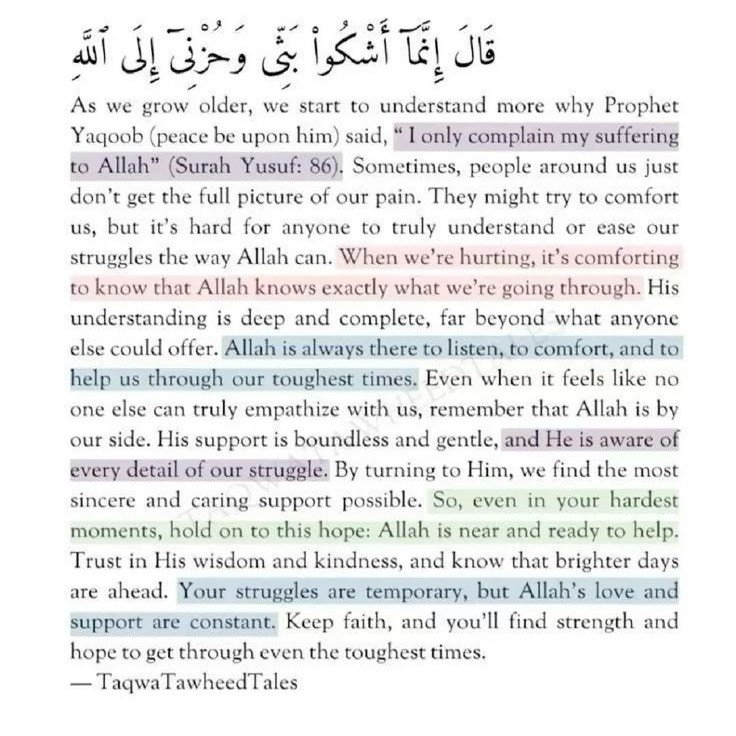

View post Copy link islamOS @islamOS · 19h When no one understands your pain, turn to Allah. He knows every unspoken sorrow, hears every silent duʿā, and never overlooks a single tear. Your pain is unseen by people, but never unknown to Allah. 0 0 0 10
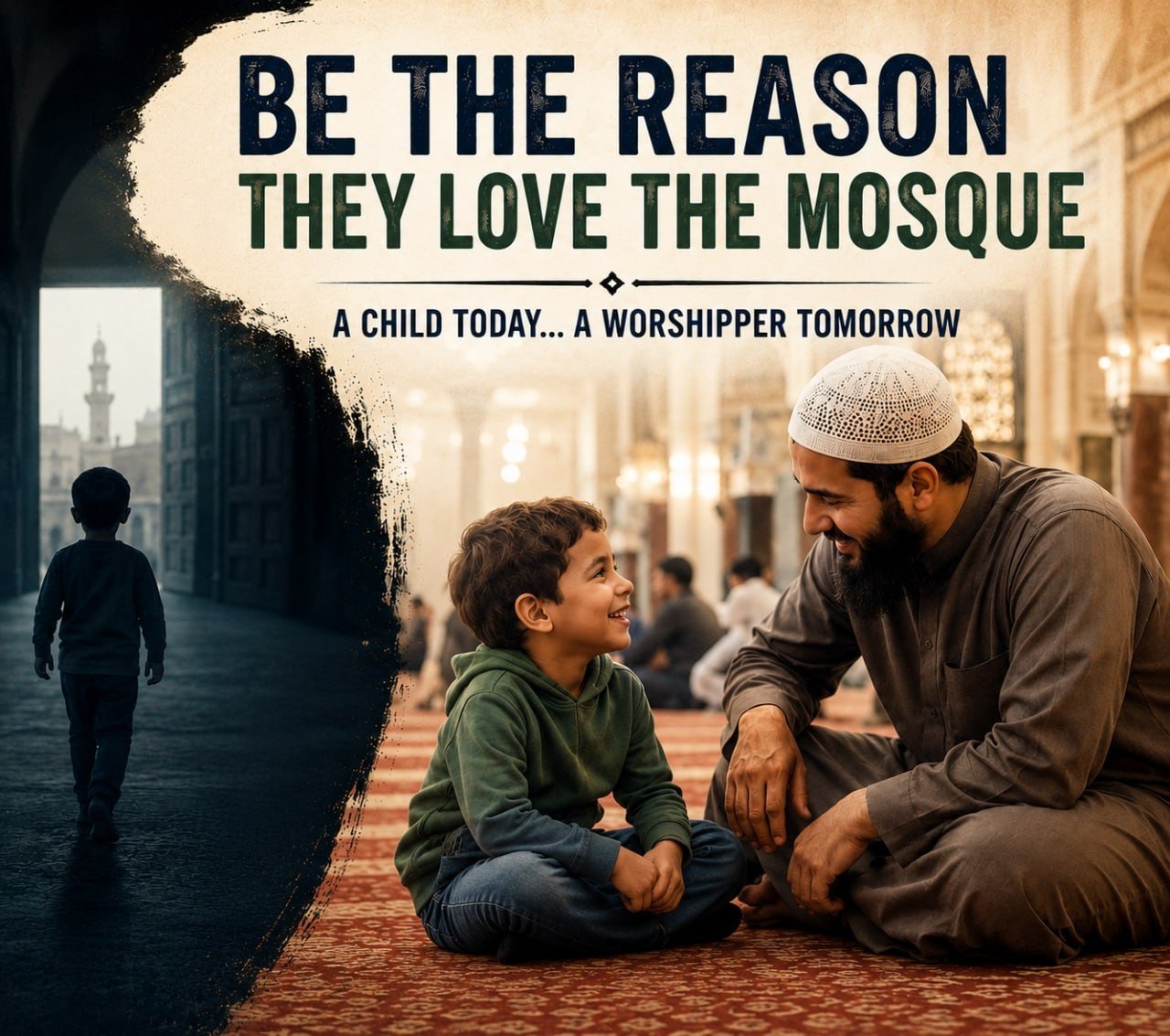
View post Copy link islamOS @islamOS · 2d Yesterday, on my way home after the Isha prayer, I walked with a virtuous brother who is one of the regular worshippers in the front row of the mosque. He is a cheerful and kind-hearted man. One of the things that most distinguishes him is the gentle way he treats children in the mosque and the… Show more Yesterday, on my way home after the Isha prayer, I walked with a virtuous brother who is one of the regular worshippers in the front row of the mosque. He is a cheerful and kind-hearted man. One of the things that most distinguishes him is the gentle way he treats children in the mosque and the effort he makes to win their affection. He told me about something that happened to him as a child that caused him to stay away from mosques for 25 years. During that entire period, he did not enter a mosque—not for Friday prayer, nor for congregational prayer—from the age of fourteen until the age of thirty-nine. This aroused my curiosity, so I asked him about the reason. He said: "I always felt unwelcome in the mosque. Some of the older people would become annoyed over the smallest things. Once, when I was young, I entered the mosque wearing a shirt with the Chicago Bulls logo on it. One man drove me away and said: 'You've brought a cow into the mosque?!' I felt as though some of the adults were hostile toward me if I made the slightest movement or sound. There was no welcome, no understanding that I was just a young boy. That is why I make a point of being gentle with children—to make them love the houses of Allah." He then told me how he finally returned to the mosque after those twenty-five years away. That happened in 2018. He heard a short lesson about one of the Prophet's Companions, and it deeply affected him. From that point on, he continued attending, and today I believe his heart is truly attached to the mosques. Just imagine the sin and responsibility borne by the person who drove this brother away from the mosques during his childhood. Someone behaves harshly and rudely, unaware that he may be counted among those who turn people away from the path of Allah. A man once came to the Prophet ﷺ and said: "I sometimes delay attending the Fajr prayer because of so-and-so, who makes the prayer excessively long for us." The narrator said that the Prophet ﷺ was never seen more angry in a sermon than he was that day. He said: "O people, some of you drive others away. Whoever leads the people in prayer should keep it brief, for behind him are the elderly, the weak, and those with needs." This was because an imam had lengthened the prayer. So what if the Master of Mercy, the Prophet ﷺ—who was so compassionate and gentle with children—had witnessed those who scold children and drive them away from the houses of Allah? And when is this happening? At a time when many Qur'an memorization centers and summer programs are being closed. Where, then, do you want our children to go? So to those who repel and discourage others: Fear Allah. Leave the children in peace. If you cannot encourage them to love the mosque, then at least spare them your harm. It is entirely natural for children to move around in the mosque, to come and go, to laugh together, and sometimes to raise their voices. If they disturb the worshippers, they should be guided gently and kindly. The presence of children is a sign of life in the mosque. They are the generation upon whom we rely to fill and maintain these mosques in the future. Driving them away from the mosque is, without realizing it, a contribution to its decline and emptiness. Dr. Eyad Qunaibi حَفِظَهُ اللَّهُ 0 0 0 13
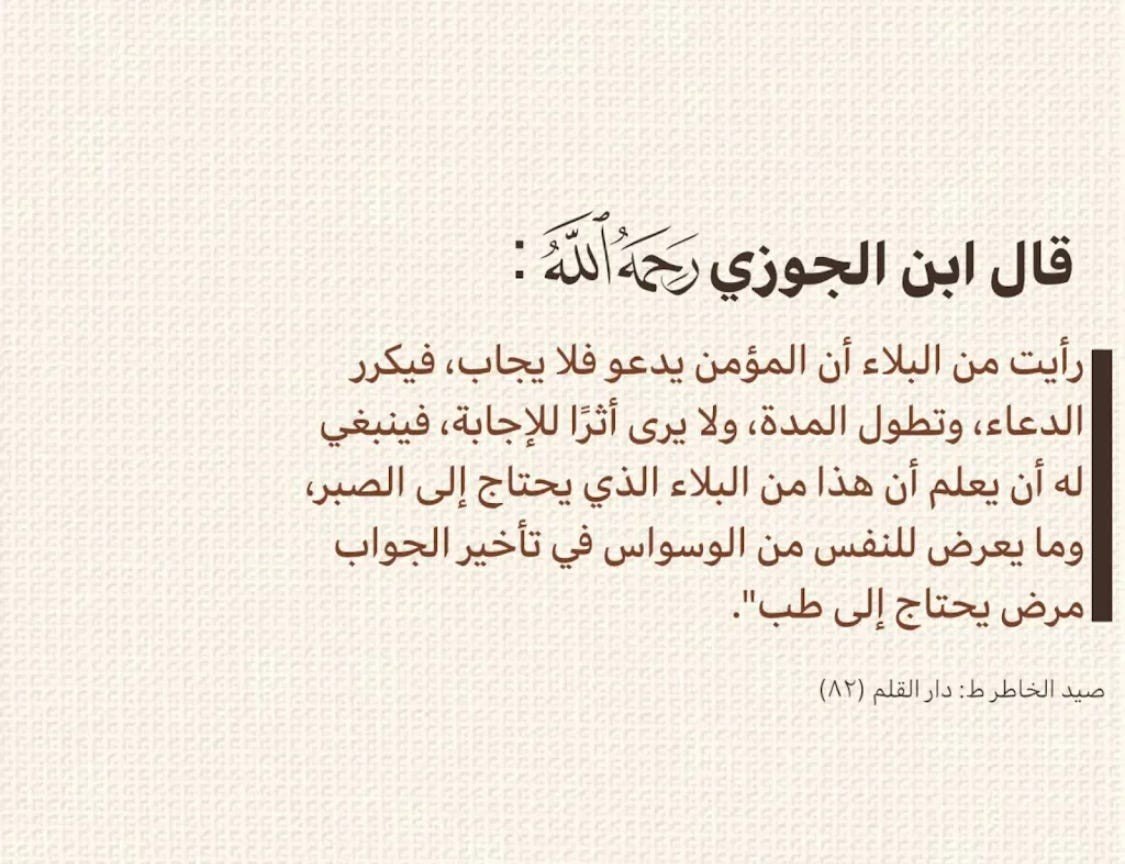
View post Copy link islamOS @islamOS · 2d Ibn al-Jawzi (may Allah have mercy on him) said: "I have seen that part of trial is when a believer supplicates (du'a) and receives no response, so he repeats the supplication over a long period without seeing any trace of an answer. He should realize that this itself is a test requiring… Show more Ibn al-Jawzi (may Allah have mercy on him) said: "I have seen that part of trial is when a believer supplicates (du'a) and receives no response, so he repeats the supplication over a long period without seeing any trace of an answer. He should realize that this itself is a test requiring patience. Furthermore, the whisperings (waswas) and doubts that enter the soul due to delayed answers are a disease requiring cure." — Sayd al-Khatir 0 0 0 10
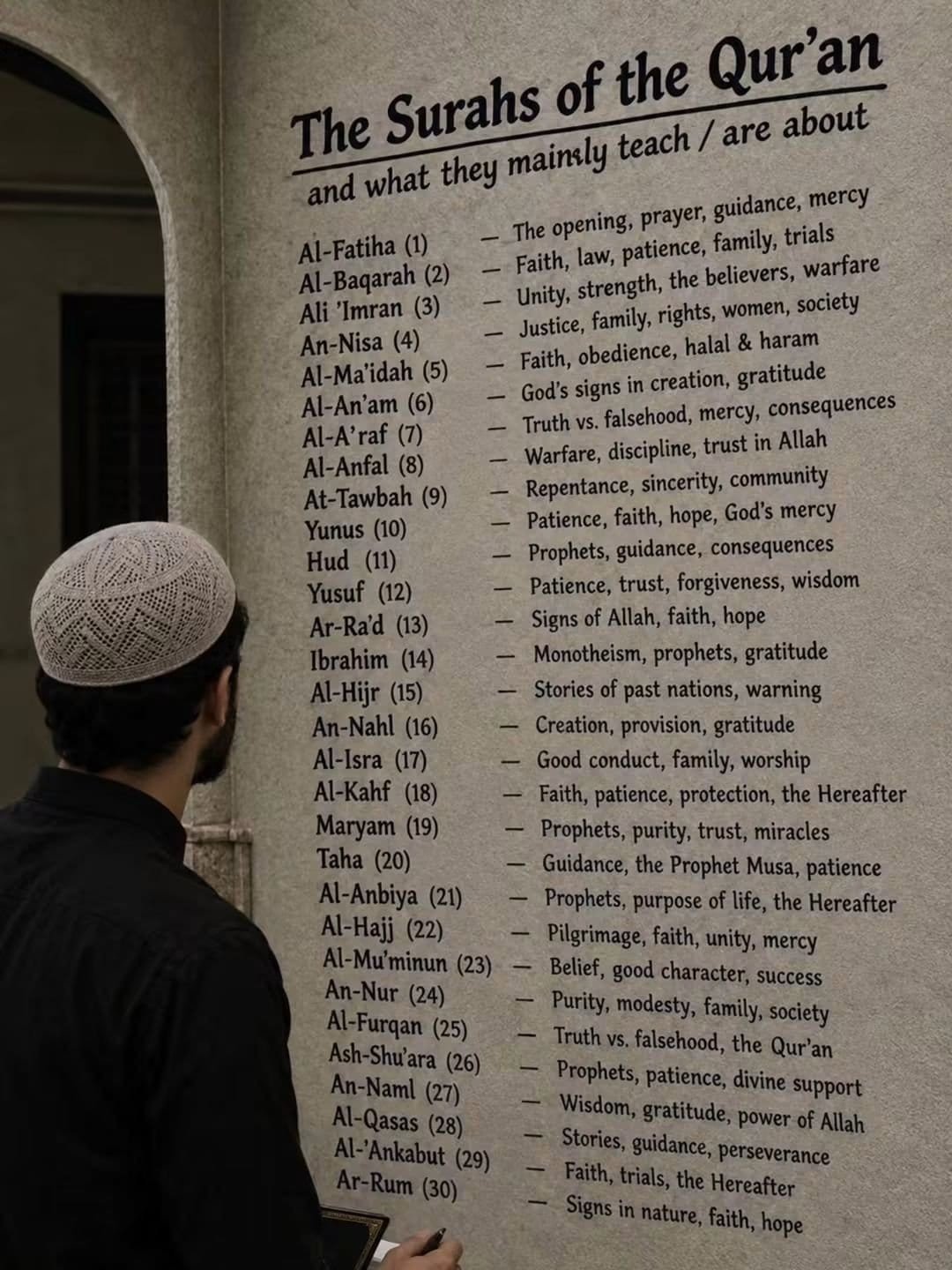
View post Copy link islamOS @islamOS · 2d ﴿الَّذِينَ آمَنُوا وَتَطْمَئِنُّ قُلُوبُهُم بِذِكْرِ اللَّهِ ۗ أَلَا بِذِكْرِ اللَّهِ تَطْمَئِنُّ الْقُلُوبُ﴾ "Those who believe and whose hearts find rest in the remembrance of Allah. Verily, in the remembrance of Allah do hearts find rest." — Surah Ar-Ra'd (13:28) 0 0 0 19
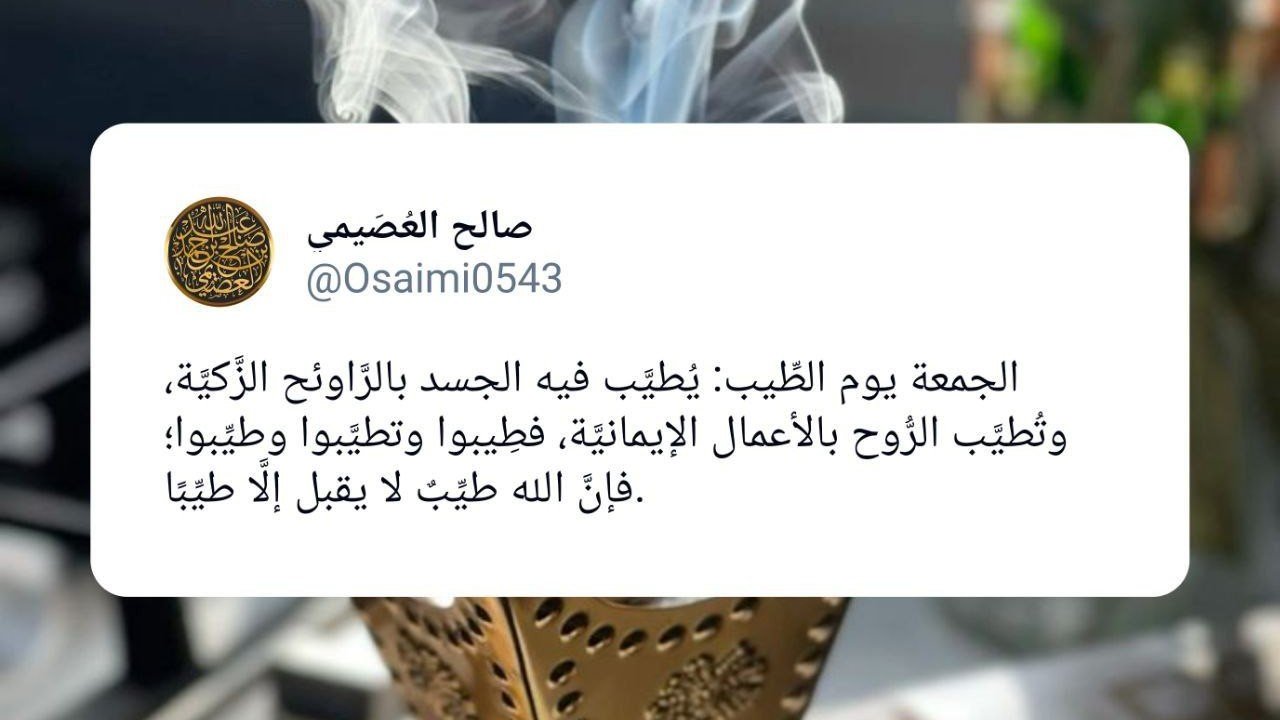
View post Copy link islamOS @islamOS · 4d Friday is the day of fragrance: The body is perfumed with pleasant smells, and the soul is perfumed with acts of faith. So be good, smell good, and spread goodness—for Allah is Good and accepts only that which is good. 0 0 0 12
View post Copy link islamOS @islamOS · 4d True friends bring you closer to Allah and make you better √ 0 0 0 6
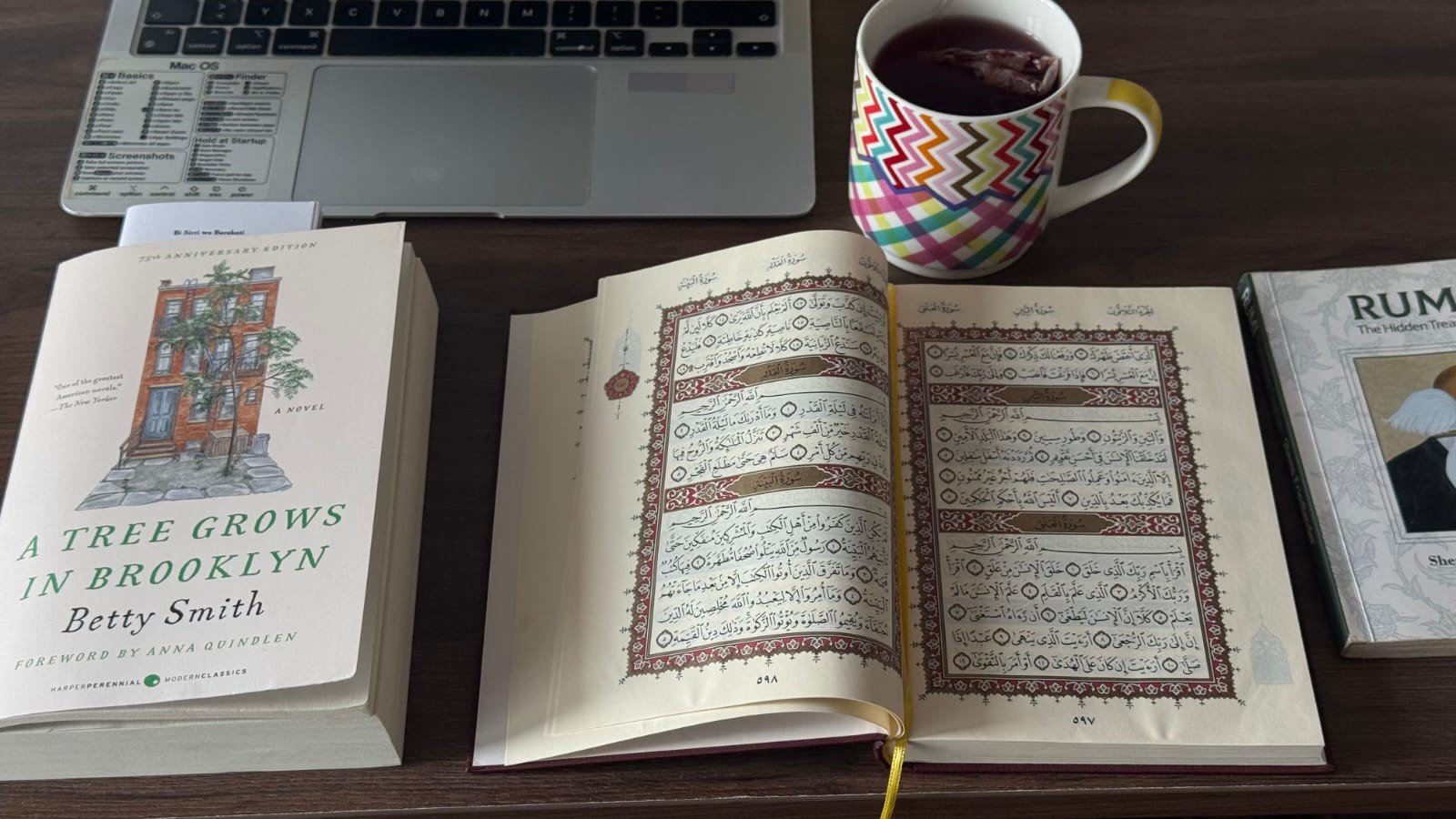
View post Copy link islamOS @islamOS · 4d In two hours of social media scrolling, you can finish making breakfast, washing dishes, reading a book, reading a chapter of the Quran, making tea, watching the mountains, listening to birds, and listening to a lecture. We have time; we only have to use it wisely. 0 0 0 4
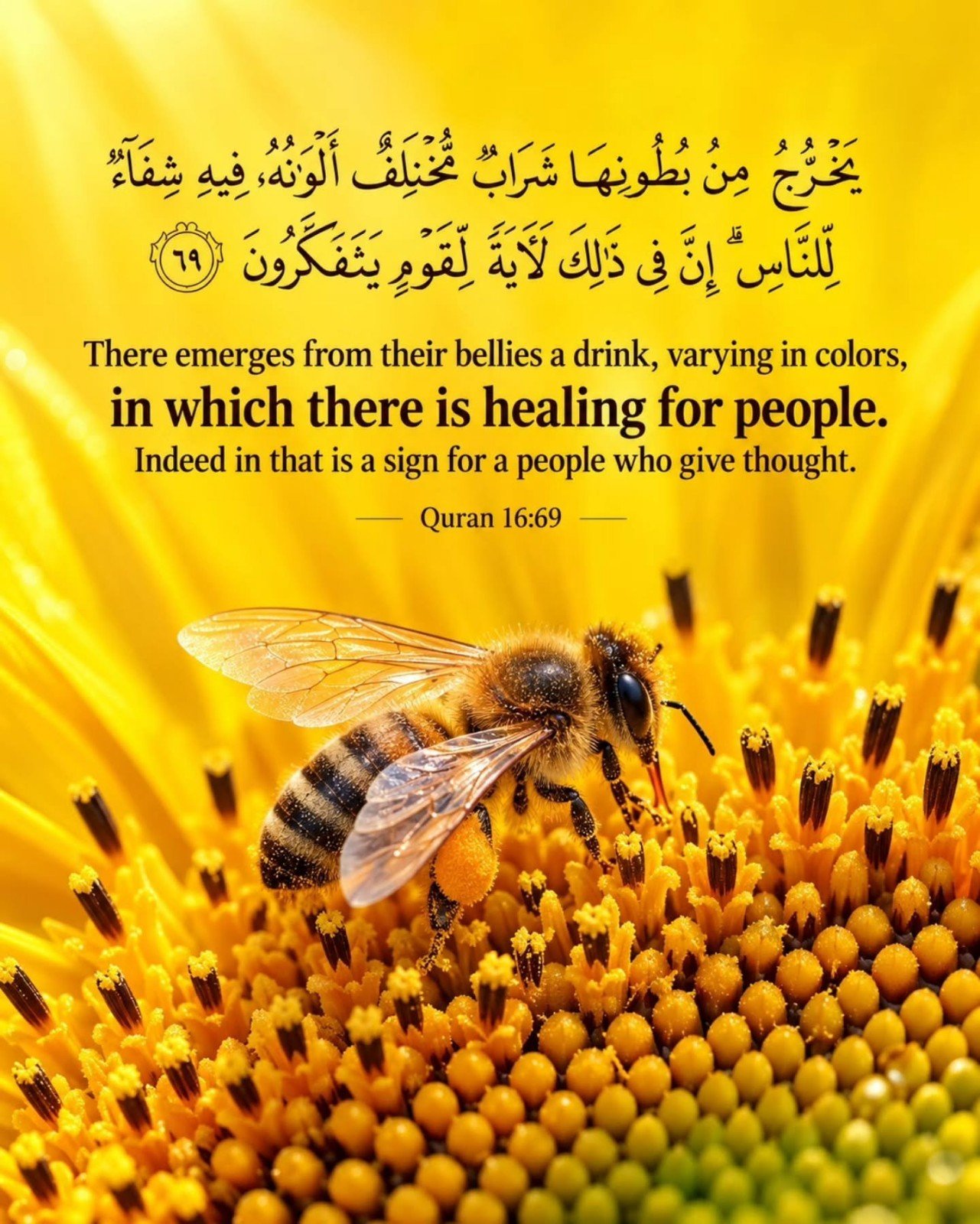
View post Copy link islamOS @islamOS · 4d Studies suggest honeybee venom’s melittin can destroy aggressive breast cancer cells within an hour in lab experiments. The Quran (16:69) mentions healing in what bees produce—a sign to reflect upon, though this finding doesn’t prove a cancer cure. 0 0 0 3
View post Copy link islamOS @islamOS · 4d Ṣalāh is the purification of the soul. It cleanses your sins and protects you from all harm. Ṣalāh is your oxygen, without which you will die. If you do not perform your ṣalāh, although you may be ‘alive’ in the physical sense, you are spiritually ‘dead’. 0 0 0 2
View post Copy link islamOS @islamOS · 4d Using a novel genetic strategy, researchers mapped individual midbrain dopamine neurons across development, adulthood, and degeneration. This atlas reveals hidden neuronal diversity and circuit wiring—offering SPIN a framework to study how synaptic maintenance changes with age. 0 0 0 3
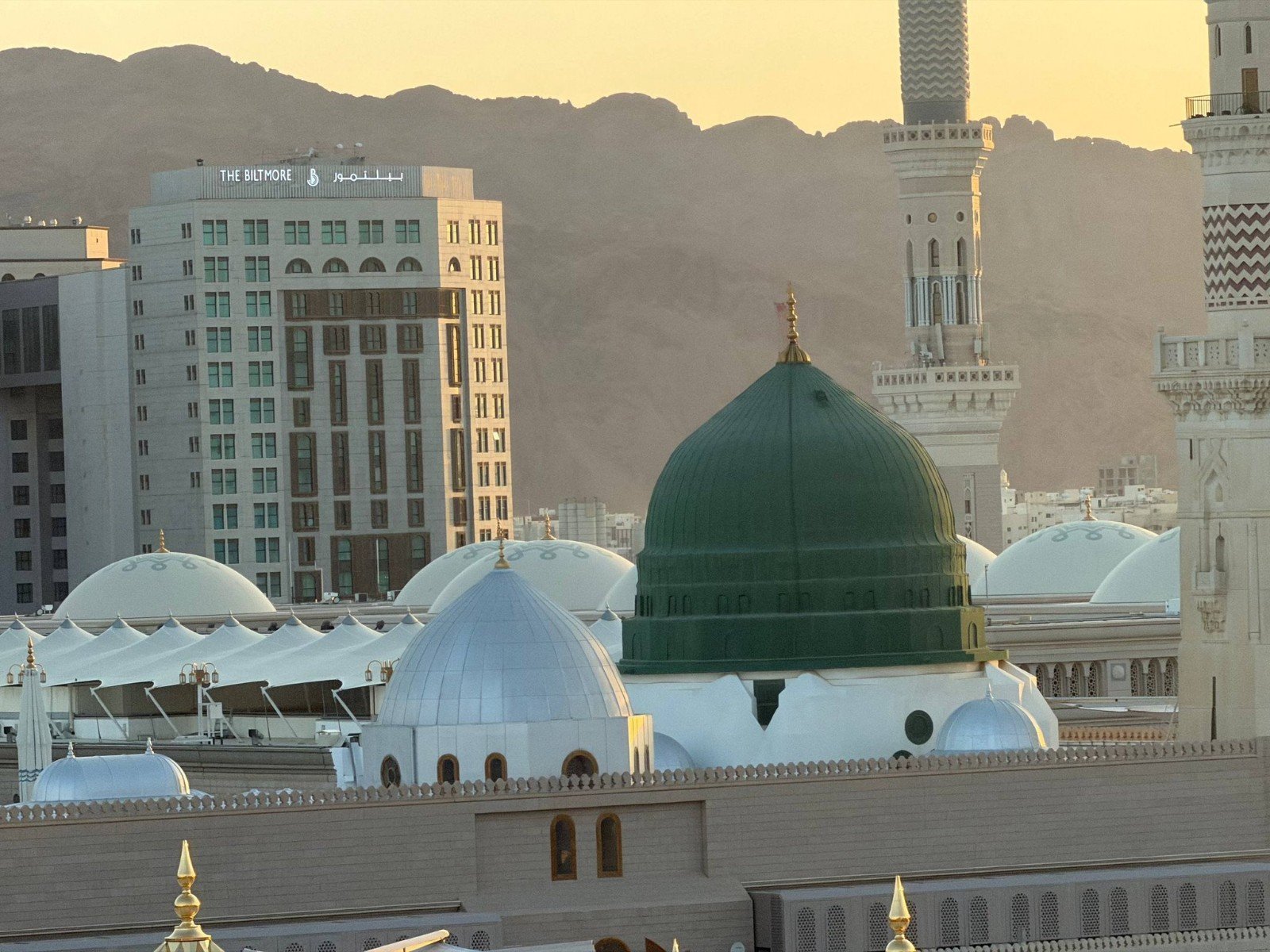
View post Copy link islamOS @islamOS · 4d The universe is but a sign, and you its meaning sought; O noblest one to whom the Praised Station has been brought. —al-Dībaʿī 1 0 0 101